Product Design
Console - A Silicon Valley startup
In a fast-moving startup environment, we designed and launched a self-service platform to disrupt the enterprise network connectivity space.
Introduction
Context
Console was a Silicon Valley startup where speed to market mattered as much as vision. Every feature needed to demonstrate value to both customers and investors, so we worked in rapid cycles of research, design, development and validation—shipping continuously and refining the product through real user feedback.
This case study walks through the key features we designed, the problems they solved, and the thinking that shaped the product through its early growth.
The problem space
Enterprise network interconnection had traditionally been slow, complex and expensive, requiring specialist knowledge and lengthy provisioning processes. Our goal was to make it accessible to everyone, from experienced network engineers to people with little or no networking background.
Product approach
Rather than designing around the underlying technology, we focused on the people using it. Console combined a global physical network, a self-service management platform, and a social community of cloud providers, network operators and enterprises into a single experience. The community layer became a key differentiator, enabling organisations to discover and connect directly while keeping interactions simple, approachable and visually engaging.
Design intent
From the outset, we worked with a clear set of expected outcomes. We aimed to increase self-service provisioning, reduce reliance on manual sales and operational processes, accelerate connection turnaround times, and drive ecosystem growth through community participation and discovery. These outcomes also acted as key signals for product-market fit and long-term commercial viability during successive funding rounds.

Community Features
One of Console’s most distinctive innovations was treating network interconnection as a community rather than simply a provisioning platform. Traditionally, organisations had to find and contact someone at the company or service they wanted to connect to before beginning a lengthy sales and technical engagement. We wanted to make discovering partners, providers and expertise feel as natural as discovering people and content on a modern social platform.
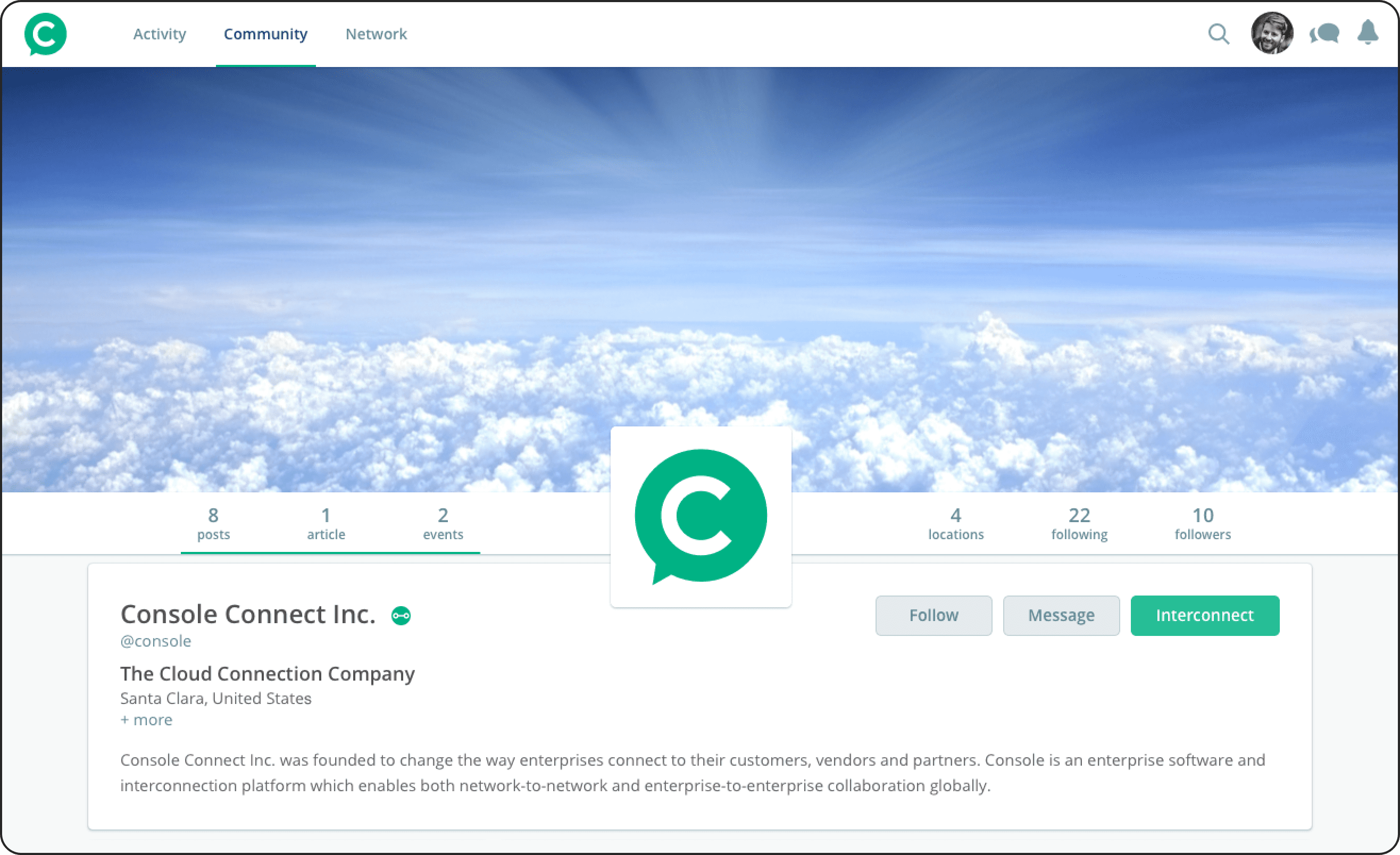
Profile pages
To support this, we designed a rich community experience centred around company and personal profiles, allowing organisations to showcase their services, network locations and expertise. Users could explore potential providers, understand where they could interconnect, and build relationships before ever provisioning a connection.
Discovery
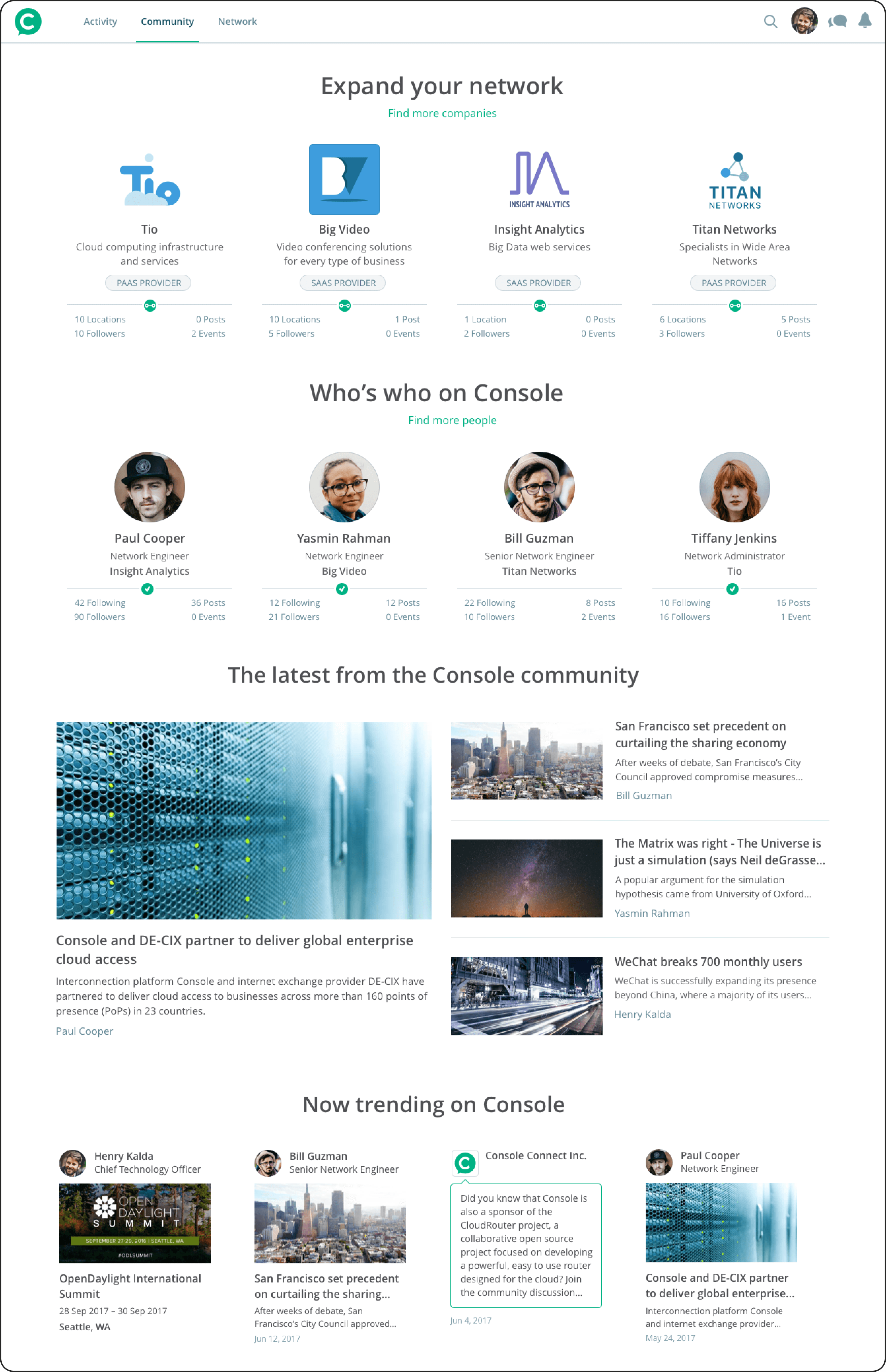
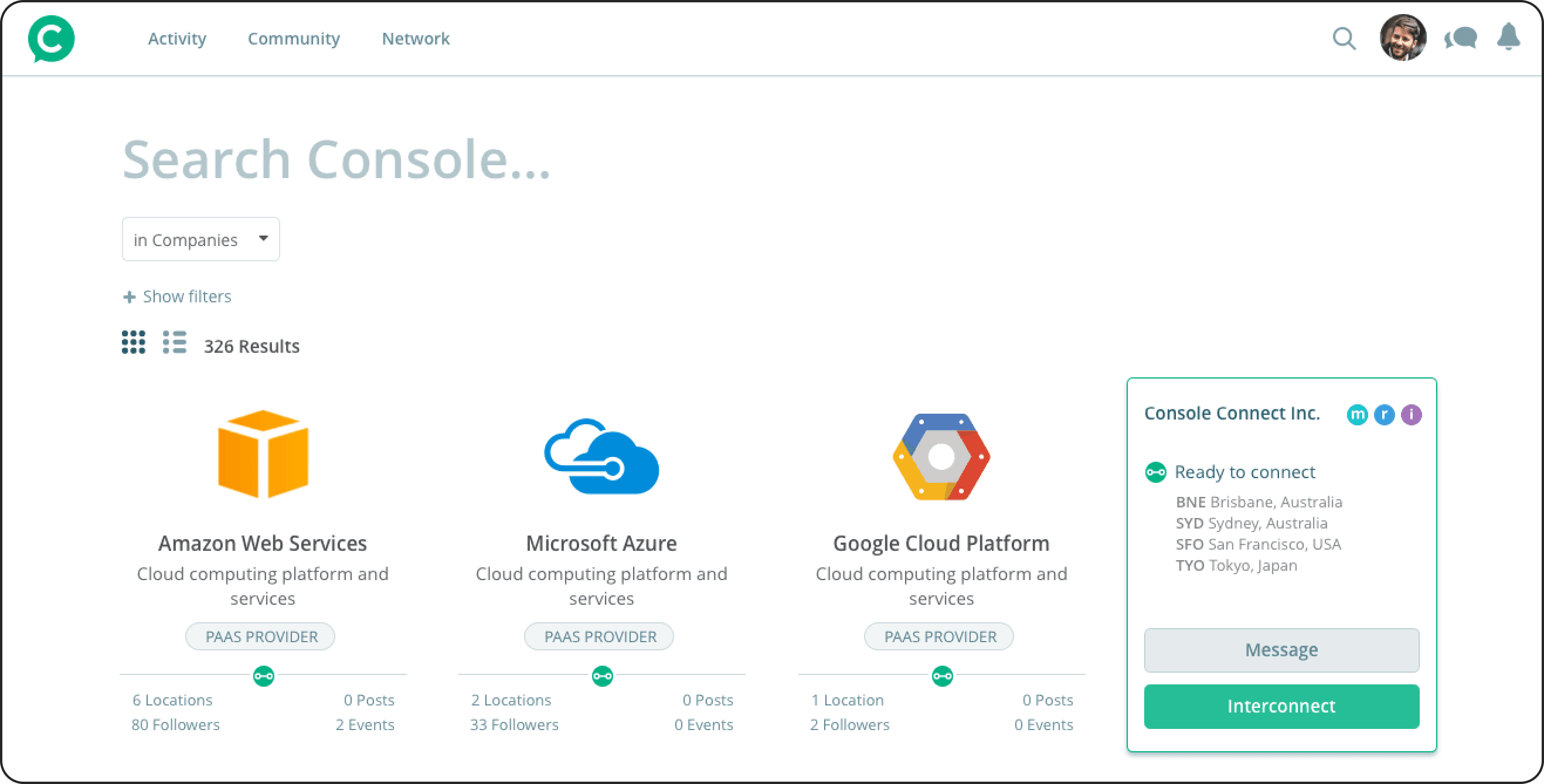
Discovery became a key design principle throughout the experience. The Featured and Trending pages surfaced popular providers, thought leaders and emerging topics, while powerful search enabled users to quickly find companies, people, articles, events and discussions from a single interface. Rich previews and contextual actions reduced the effort required to evaluate results and navigate the platform.
Engagement
To encourage ongoing engagement, we introduced a personalised activity feed that brought together posts, articles, events and platform notifications from organisations and individuals users chose to follow. Rather than requiring customers to actively search for new information, relevant content was delivered directly to them, helping transform Console from a transactional tool into a destination users returned to regularly.

Expected outcomes
Our goal was to create more than a network management platform—we wanted to build an ecosystem. By lowering the barrier to discovering providers, partners and industry expertise, we aimed to help organisations find new interconnection opportunities, enable providers to promote their services, and encourage knowledge sharing across the community. We expected success to be reflected in growing community engagement, increasing numbers of company and user profiles, more published content, stronger provider discovery, and ultimately a network effect where every new participant increased the value of the platform for everyone else.
Network Features
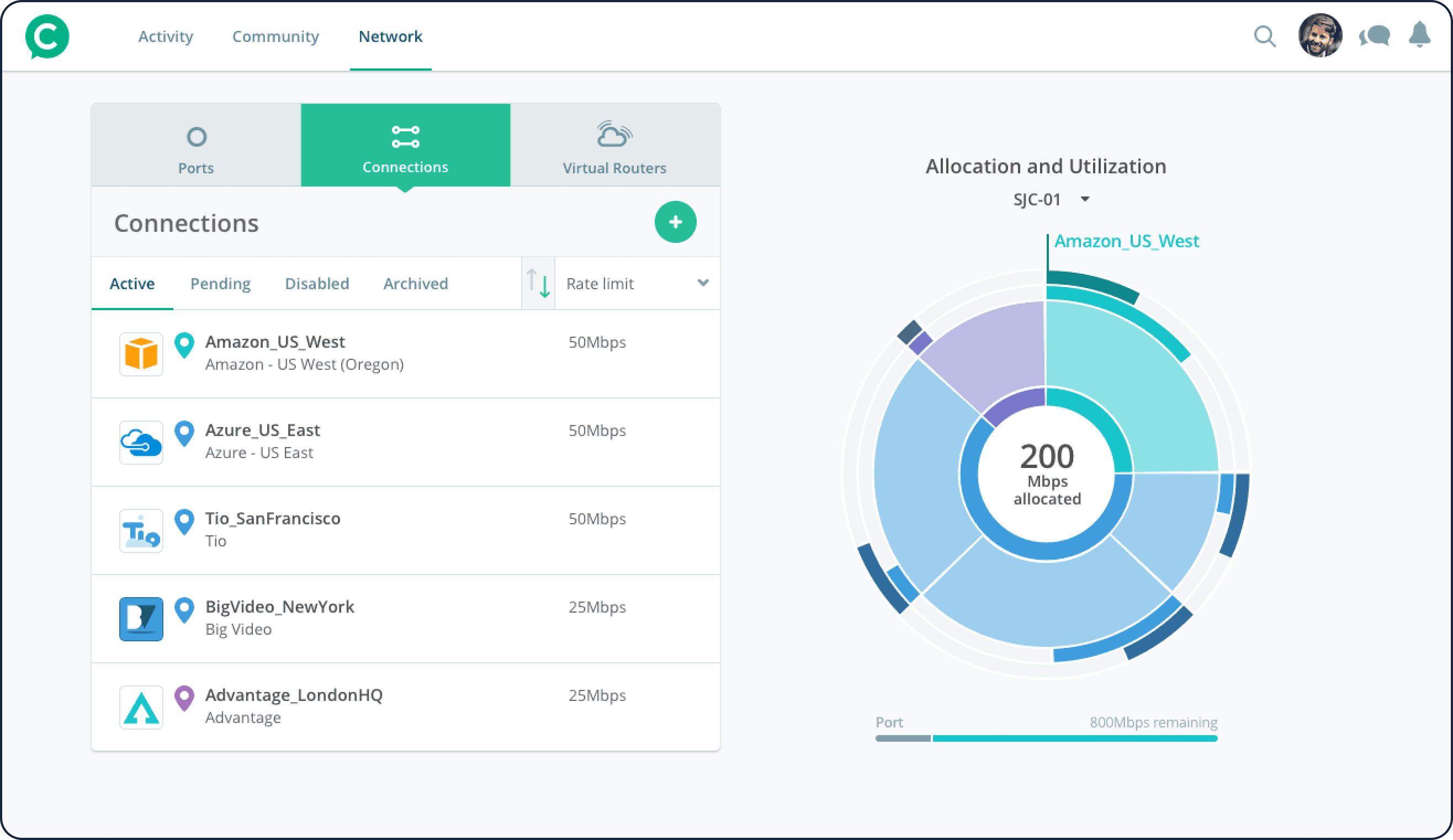
One of Console’s biggest innovations wasn’t just the way you connected —it was the business model behind it. Traditionally, network operators had to seek financial approval every time they wanted to provision a new connection, creating delays and unnecessary administration. We introduced tiered subscription plans that included allowances for Metro, Regional and Global bandwidth, enabling customers to create new connections instantly within their allocated capacity. By making network resources visible and self-service, we gave operators the autonomy to act while giving organisations confidence they remained within agreed commercial limits.
Network Overview
The Network Overview was designed to answer the most common operational question: “What does my network look like right now?” Rather than forcing users to navigate multiple reports, we surfaced network health, bandwidth allocation, utilisation and subscription entitlements in a single dashboard. Clear visualisations allowed operators to understand capacity at a glance, identify available bandwidth, and confidently provision additional services without exceeding their plan limits.
Create New Connections
Provisioning private network connections had historically involved emails, sales representatives, manual forms and long lead times. We reduced this to a guided workflow where users simply selected a provider, destination, location and required bandwidth before submitting the request. The experience deliberately hid the underlying networking complexity, allowing users of varying technical backgrounds to confidently create enterprise-grade interconnections in minutes instead of days or weeks.

Connection Dashboard
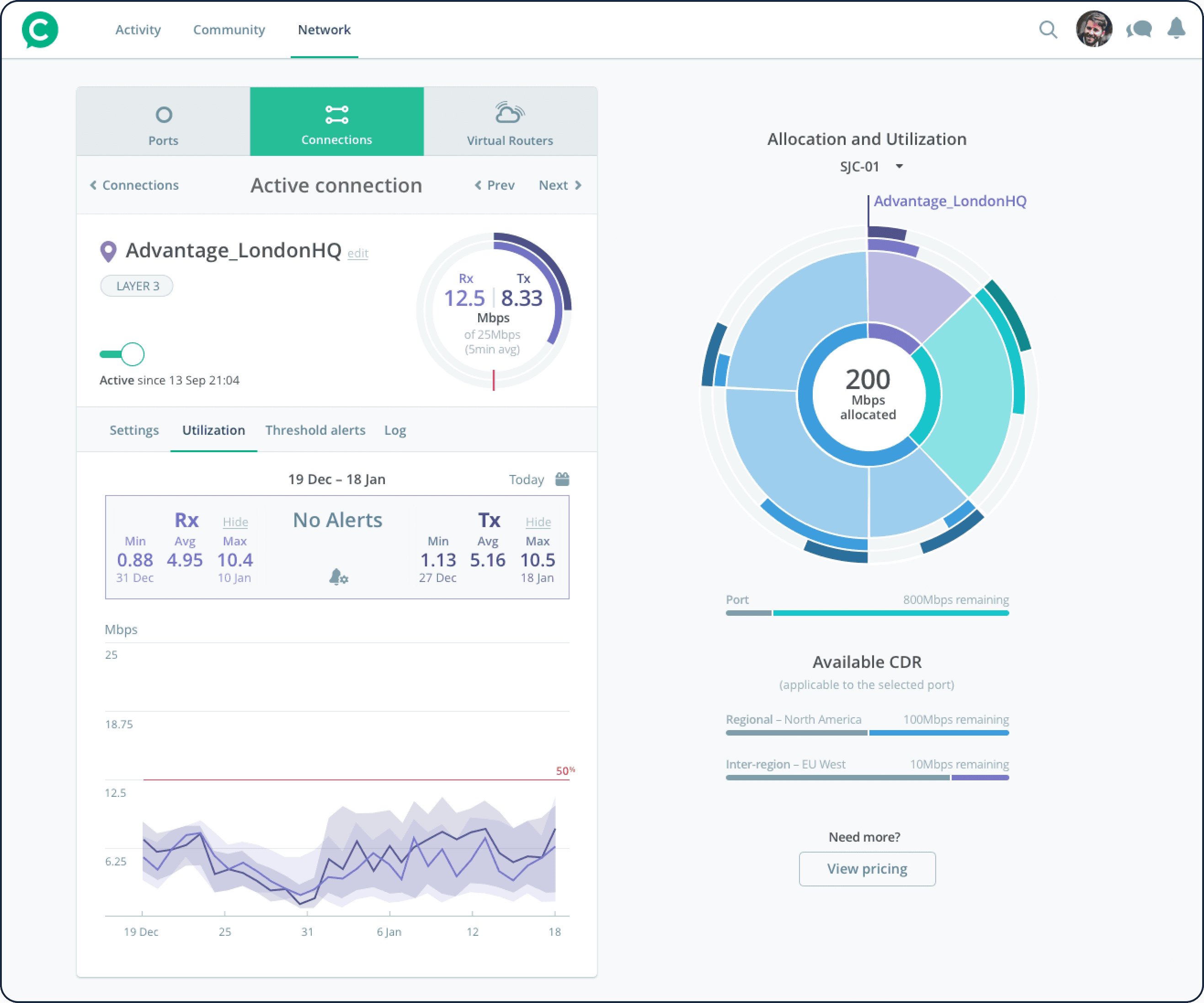
Once a connection was established, customers needed confidence that it was performing as expected. The Connection Dashboard provided a detailed operational view of each service, including real-time utilisation, historical trends and key connection information. By making up to 90 days of usage data immediately accessible, operators could identify patterns, understand demand and make informed decisions about future capacity requirements without relying on external reporting tools.
Real-Time Alerts
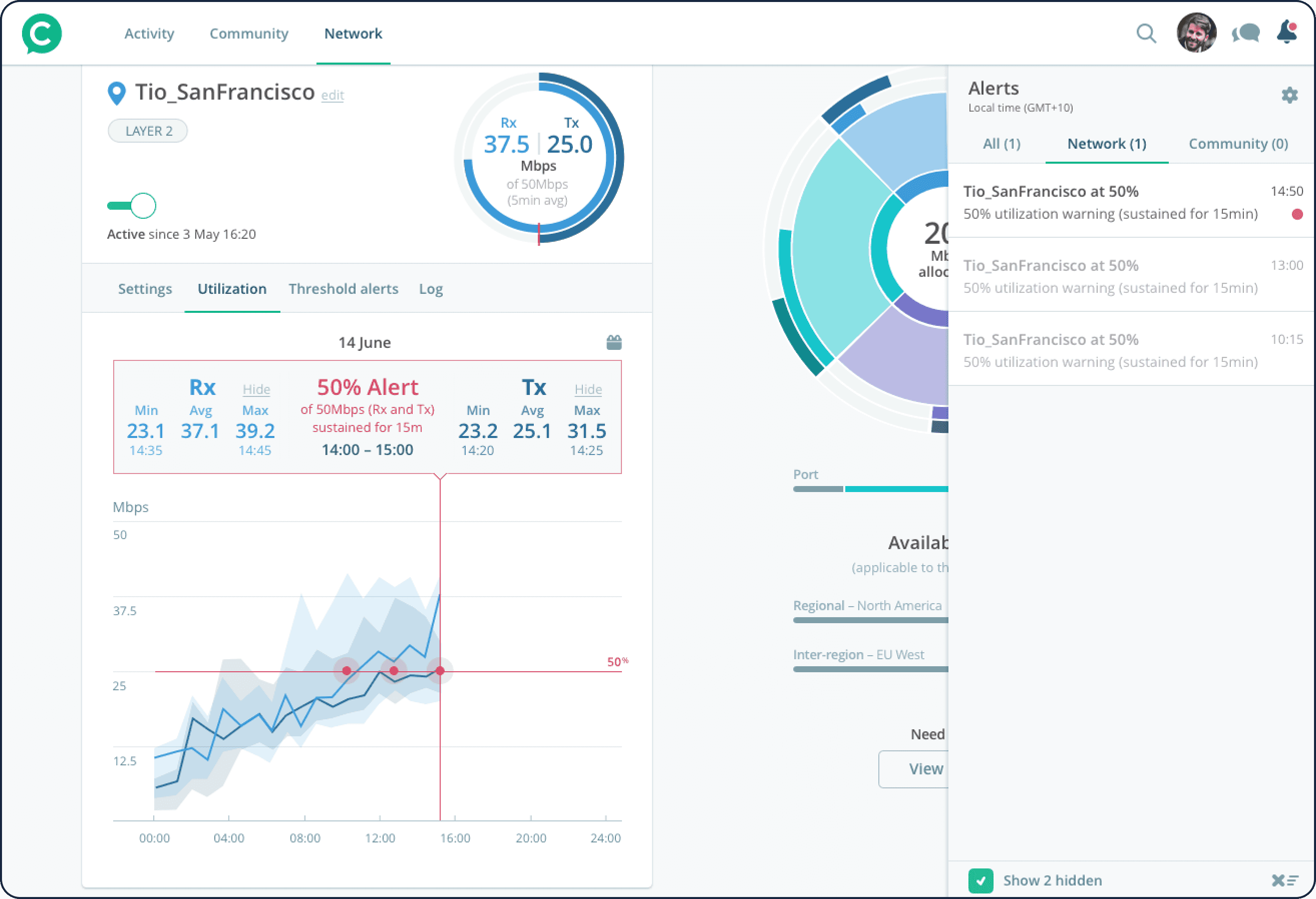
Network issues are often discovered only after users experience degraded performance. We designed configurable real-time alerts that notified operators as utilisation approached user-defined thresholds, allowing potential capacity issues to be identified before they became service problems. Giving customers control over alert levels meant the platform could support both highly sensitive production environments and less critical workloads without unnecessary notification fatigue.
Expected outcomes
These features were designed to remove the friction traditionally associated with enterprise networking. We wanted customers to understand their available capacity, provision services independently, monitor network health in real time and make informed decisions without relying on sales or operations teams. We expected success to be measured through increased self-service provisioning, faster connection turnaround times, reduced reliance on manual sales and operational support, growing utilisation of subscription bandwidth, and increased customer adoption and retention.
Overall outcomes and lessons learned
Product outcomes
Console demonstrated that enterprise networking could be transformed into a simple, self-service experience. Customers consistently praised the usability of the platform, particularly the intuitive provisioning workflows, clear network visualisations and approachable interface. The subscription model also validated that many operational decisions could be decentralised to network teams, reducing reliance on manual sales and approval processes and improving speed of delivery.
Community outcomes
The community features successfully enabled discovery of organisations, providers and industry expertise within a single platform. However, the broader vision of a social networking layer for network professionals did not achieve the level of engagement we had originally anticipated. In practice, most users were focused on solving technical and operational problems rather than participating in ongoing social interaction, and many already relied on established industry forums and communities.
Platform and business constraints
Over time, it became clear that product experience alone was not enough to drive platform success. Console’s value depended heavily on ecosystem scale—data centres, cloud on-ramps, network providers and SaaS integrations. Building this network of participants required significant commercial investment and time, and platform growth lagged behind the maturity of the user experience. At the same time, the subscription model proved challenging to scale due to the wide variation in customer requirements and the complexity of pricing across different use cases.
Commercial outcome
These factors contributed to an unsuccessful Series C funding round, which ultimately led to the acquisition of Console by PCCW Global. Following the acquisition, the focus shifted toward expanding the core network ecosystem and strengthening the underlying product, while the community layer evolved into a more focused, forum-style experience for technical knowledge sharing.
Key lessons learned
This experience reinforced a lasting lesson: exceptional user experience can drive adoption, but sustainable success depends equally on business model design, ecosystem maturity and product-market fit. It highlighted the importance of designing not only for usability and engagement, but also for the commercial and structural conditions required for a platform to scale.